Episode 16

full
Published on:

5th Mar 2026

Day 16 | Prayer During Ramadan

Day 16 | Prayer During Ramadan


In Islam, there are five daily prayers The Salaht in Arabic -practiced year-round. But during Ramadan, they take on deeper meaning and become the rhythm that structures the entire day.

In this episode, we explore how prayer anchors Ramadan, especially Fajr (which marks the start of fasting) and Maghrib (which marks the end).

You'll discover:

  1. The five daily prayers and their timing throughout the day
  2. How Fajr and Maghrib become the bookends of your fast
  3. Why mosques fill up during Ramadan more than any other time
  4. How prayer creates grounding when you're tired from fasting
  5. The difference between perfect prayer and present prayer
  6. Starting small: building the habit one prayer at a time
  7. For expats: understanding prayer breaks in Gulf workplaces
  8. Why presence matters more than precision

This episode is practical, warm, and accessible; whether you're Muslim trying to establish a prayer routine during Ramadan, or an expat wanting to understand the rhythm of prayer in daily life.

Because prayer isn't about adding another task to your list. It's about creating intentional pauses - five times a day - that bring you back to center.

For daily, sharp GCC business and cultural insights that take less than 60 seconds to read, The Souk Secrets newsletter is the place to go. Join here: https://www.thesouksecrets.com/subscribe
Listen for free

Show artwork for The Souk Stories

About the Podcast

The Souk Stories
Voices from the Crossroads
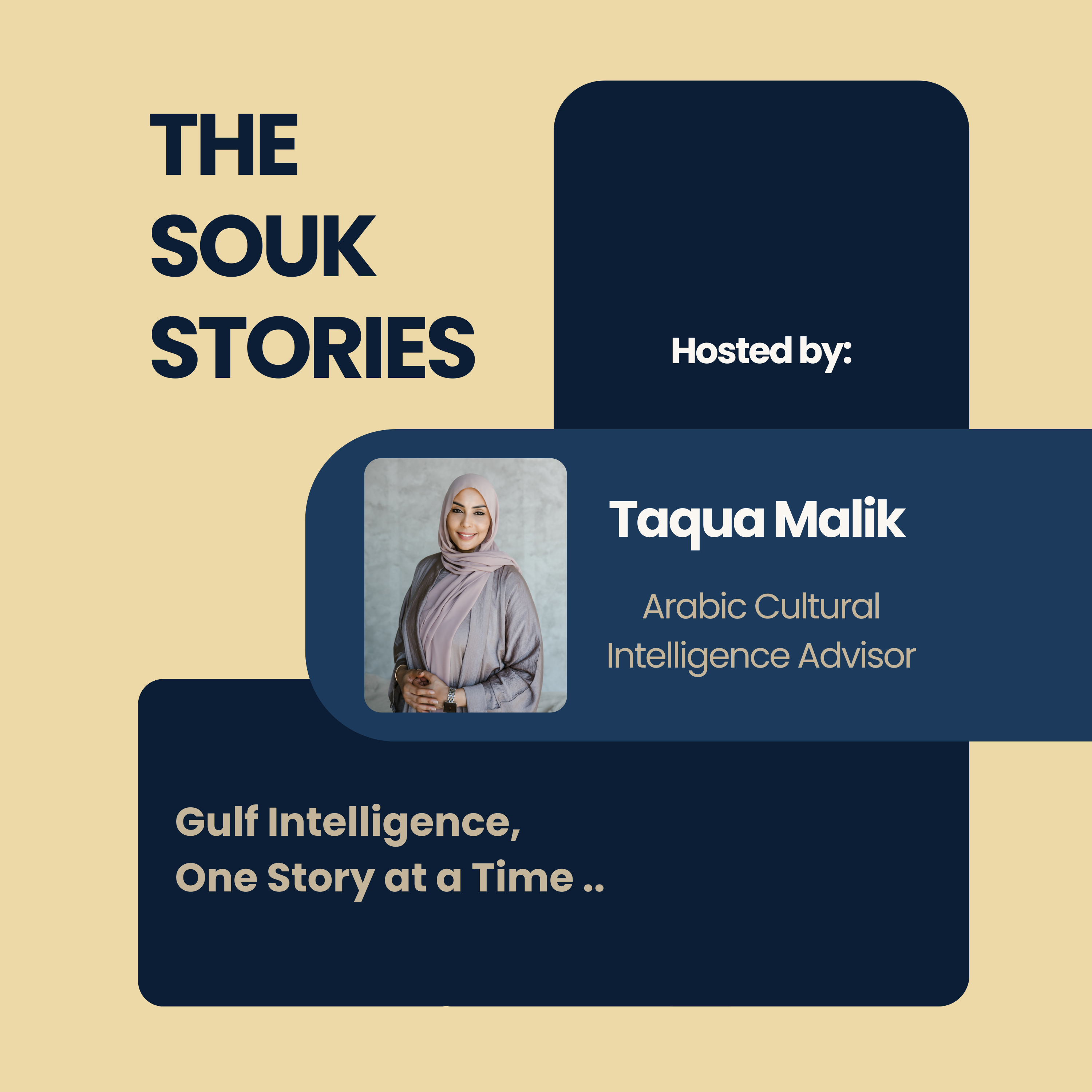
The Souk Stories is a podcast about culture, business, and the human experiences that shape Arabic life and Gulf business culture; hosted by Taqua Malik, a cultural intelligence advisor with over a decade of experience bridging Western and GCC worlds.

Each episode explores topics that matter: Gulf business culture, Arabic business etiquette, professional life across borders, and how culture adapts to modernity.

This podcast is for:

- Professionals working across cultures (especially UAE, Saudi Arabia, Qatar), who are curious about Islamic culture and GCC markets.
- Leaders, lawyers, and globally-minded individuals navigating multicultural spaces, seeking deeper understanding of the Arabic culture, traditions, and identity
- Anyone who believes culture is a bridge, not a barrier

What makes it different?
It's storytelling with substance, not devotional, not surface-level. Just honest, culturally intelligent conversations that help you understand not just what people practice, but why it matters.

Taqua brings insider perspective and global fluency. Based in Dubai, she clarifies without simplifying, educates without preaching, and connects tradition to modern professional life with warmth and precision.

From Ramadan reflections to business etiquette and honor codes, every episode expands your understanding and sharpens your cultural intelligence.

For daily, sharp GCC business and cultural insights that take less than 60 seconds to read, The Souk Secrets newsletter is the place to go. Join here: https://www.thesouksecrets.com/subscribe

Subscribe. Listen. Reflect. Connect.

About your host

Profile picture for Taqua Malik

Taqua Malik

Taqua Malik is a cultural intelligence advisor and founder of Freedomvisory, specializing in Gulf Cooperation Council (GCC) markets. With over 15 years of experience bridging Western and Gulf business cultures, she advises decision makers, global law firms, advisors, and professional services on navigating the cultural and professional norms in the GCC, mainly the UAE, Saudi Arabia, and Qatar.

Based in Dubai, Taqua brings deep cultural fluency to conversations about culture, identity, business etiquette, and cross-border strategy. She is also the creator of The Souk Stories podcast and founder of The Souk Tribe, a premium community for professionals seeking cultural intelligence in GCC markets.

Through her work, Taqua helps globally-minded leaders understand not just what to do - but why it matters - when operating across cultures.